Digital Paper Wood Grain Backgrounds: Natural Texture for Modern Design
There's a reason wood grain never goes out of style. It brings warmth, authenticity, and a grounded feeling that synthetic patterns struggle to replicate. When you're working on a project that needs to feel approachable—whether it's a brand identity for a local coffee roaster, packaging for handmade goods, or social media graphics for a lifestyle blog—digital paper wood grain backgrounds give you that organic foundation without the hassle of photographing actual wood surfaces.
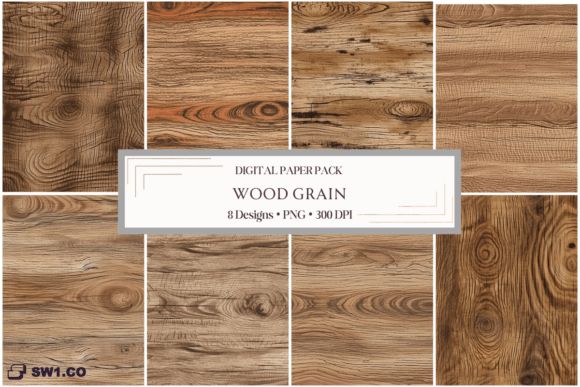
This particular set of high quality digital paper wood grain backgrounds comes as eight PNG files, each sized at 12 by 12 inches (3600 by 3600 pixels) at 300 DPI. That resolution matters more than you might think. It means these files hold up beautifully in print—no pixelation, no soft edges, no awkward compression artifacts when you scale them for larger projects. Whether you're designing a business card or a wall poster, the detail stays crisp.
Understanding the Visual Character
Wood grain textures carry a distinct personality. They suggest craftsmanship, tradition, and a connection to natural materials. The grain patterns themselves vary—some run tight and parallel, others swirl with knots and imperfections that tell a story. This variety is exactly what makes wood grain such a versatile design asset. A clean, linear grain reads as modern and refined. A rougher, more textured grain feels rustic and handmade.
What sets these digital paper wood grain backgrounds apart from free alternatives you'll find scattered across the internet is consistency and quality. Free resources often come with licensing headaches, inconsistent resolutions, or color profiles that shift unpredictably when you move from screen to print. With a curated pack like this, you know exactly what you're getting: uniform sizing, reliable color fidelity, and files ready for immediate use in your design workflow.
Where Wood Grain Backgrounds Actually Work
Let's talk practical applications, because this is where the real value lives. Wood grain backgrounds aren't just decoration—they serve specific functional and emotional roles in design.
Branding and Identity Design work benefits enormously from natural textures. If you're building a brand identity for a brewery, a woodworking shop, a farm-to-table restaurant, or any business that wants to communicate authenticity, wood grain backgrounds become a foundational element. Use them as website hero sections, business card backs, or letterhead backgrounds. The texture adds depth without competing with your logo design or typography choices.
Packaging Design is another area where these backgrounds shine. Product labels, box inserts, tissue paper prints, hang tags for clothing brands—any physical product that wants to evoke a handmade or artisanal quality can use wood grain as a backdrop. The PNG format makes it straightforward to layer text and graphics on top in programs like Adobe Illustrator, Photoshop, or even Canva.
Editorial Design and Publishing projects, including magazine layouts, book covers, and digital publications, use textured backgrounds to establish mood. A cookbook featuring rustic recipes, a lifestyle magazine targeting outdoor enthusiasts, or a self-published memoir about rural life—these all benefit from the visual language that wood grain provides.
Social Media Graphics and Digital Content represent perhaps the most common use case today. Instagram posts, Pinterest pins, Facebook cover photos, YouTube thumbnails, and blog headers all need visual interest to stop the scroll. A wood grain background gives your text and imagery a warm, tactile quality that flat colors simply can't match. It photographs well on screens and reads clearly even at smaller sizes.
Sublimation Printing and Craft Projects deserve special mention here. If you work with sublimation—creating custom mugs, coasters, phone cases, apparel, or home décor items—these files are specifically formatted for that process. The 300 DPI resolution ensures your printed products look professional, and the 12-inch square format works well for many standard sublimation blanks.
Making Smart Design Decisions with Texture
Here's something experienced designers understand intuitively but rarely discuss openly: texture influences perception more than most people realize. A wood grain background doesn't just look nice—it actively shapes how your audience interprets your message. It suggests reliability, warmth, and substance. It can make a new brand feel established. It can make a digital product feel tangible.
That said, restraint matters. Not every project needs texture, and wood grain specifically works best when it complements rather than dominates. A few practical guidelines:
- Pair wood grain with clean sans serif fonts for a modern-meets-natural contrast. The texture provides warmth while the typography maintains readability and contemporary appeal.
- Use opacity adjustments to dial back the texture intensity when it competes with foreground elements. A subtle wood grain at 30% opacity behind a product photo creates atmosphere without distraction.
- Consider color grading these backgrounds to match your brand palette. Most wood grain textures respond well to color overlays—warm tones for autumn campaigns, cooler washes for minimalist aesthetics.
- Test at actual output size before committing. What looks balanced on a 27-inch monitor might overwhelm a business card design. Print a test or view at 100% zoom to evaluate real-world impact.
Technical Details That Matter
The eight PNG files included in this pack give you enough variety to maintain visual interest across a multi-piece project without repeating the same background everywhere. That's a practical consideration many people overlook until they're halfway through designing a cohesive brand suite and realize they need more than one texture option.
A few important notes worth repeating: these files are PNG format, not SVG or layered vector files. They're not designed for cutting machines like Cricut or Silhouette. They are raster-based design assets intended for backgrounds, textures, and sublimation printing. If your workflow involves digital illustration software or print-on-demand platforms, you'll find them immediately compatible. If you need layered files for vinyl cutting, you'll want to look elsewhere—but for the vast majority of design, print, and digital projects, PNG is exactly what you need.
The instant download format means no waiting for shipping, no physical inventory to store. You purchase, download the ZIP file, extract your PNGs, and start working. For entrepreneurs and small business owners juggling multiple responsibilities, that immediacy matters. You can go from concept to finished design in the same afternoon.
Wood grain backgrounds occupy a specific and valuable niche in the broader world of design assets. They're not trying to be everything—they're doing one thing exceptionally well, which is bringing organic warmth and visual depth to projects that need it. Whether you're a crafter creating custom products, a marketer building campaign materials, a designer developing brand identity systems, or a hobbyist exploring creative projects on weekends, having a reliable set of high quality wood grain textures in your toolkit saves time and elevates your output.